
Quick answer
A padlock is a portable lock with a shackle that passes through an opening to prevent theft, vandalism, or unauthorized access. Used in various industries, padlocks come in diverse types, each suited for specific applications.
Padlock Definition and Meaning
A padlock is a detachable locking device with a shackle that can be passed through an opening to secure items against theft, vandalism, or unauthorized access. It is designed to provide a basic level of security and is widely used across different sectors.
Padlocks are versatile and portable, making them ideal for securing gates, doors, lockers, and other movable objects. They are commonly used in residential, commercial, and industrial settings, offering convenience and flexibility.
How a Padlock Works
A padlock consists of a body, shackle, and locking mechanism. The shackle is the U-shaped bar that opens and closes, while the body houses the locking mechanism. When locked, the shackle is secured in the body, preventing it from being removed.
Padlocks can employ various locking mechanisms, such as key-based or combination systems. Key-based padlocks require a key to unlock, while combination padlocks use a sequence of numbers. Both types offer different levels of security and convenience.
Padlock Specifications
Understanding the specifications of a padlock is crucial for selecting the right type for specific applications. Key specifications include dimensions, shackle diameter, material, and locking mechanism.
Additional factors like weather resistance and tensile strength are also important. For example, outdoor padlocks often have special coatings to withstand harsh weather conditions, and tensile strength tests ensure the padlock can withstand force.
| Specification | Description |
|---|---|
| Body Dimensions | Typically 40–60 mm in width |
| Shackle Diameter | Ranges from 5 mm to 10 mm |
| Material | Steel, brass, or alloy |
| Locking Mechanism | Key or combination |
| Weather Resistance | Coatings for outdoor use |
Types of Padlocks
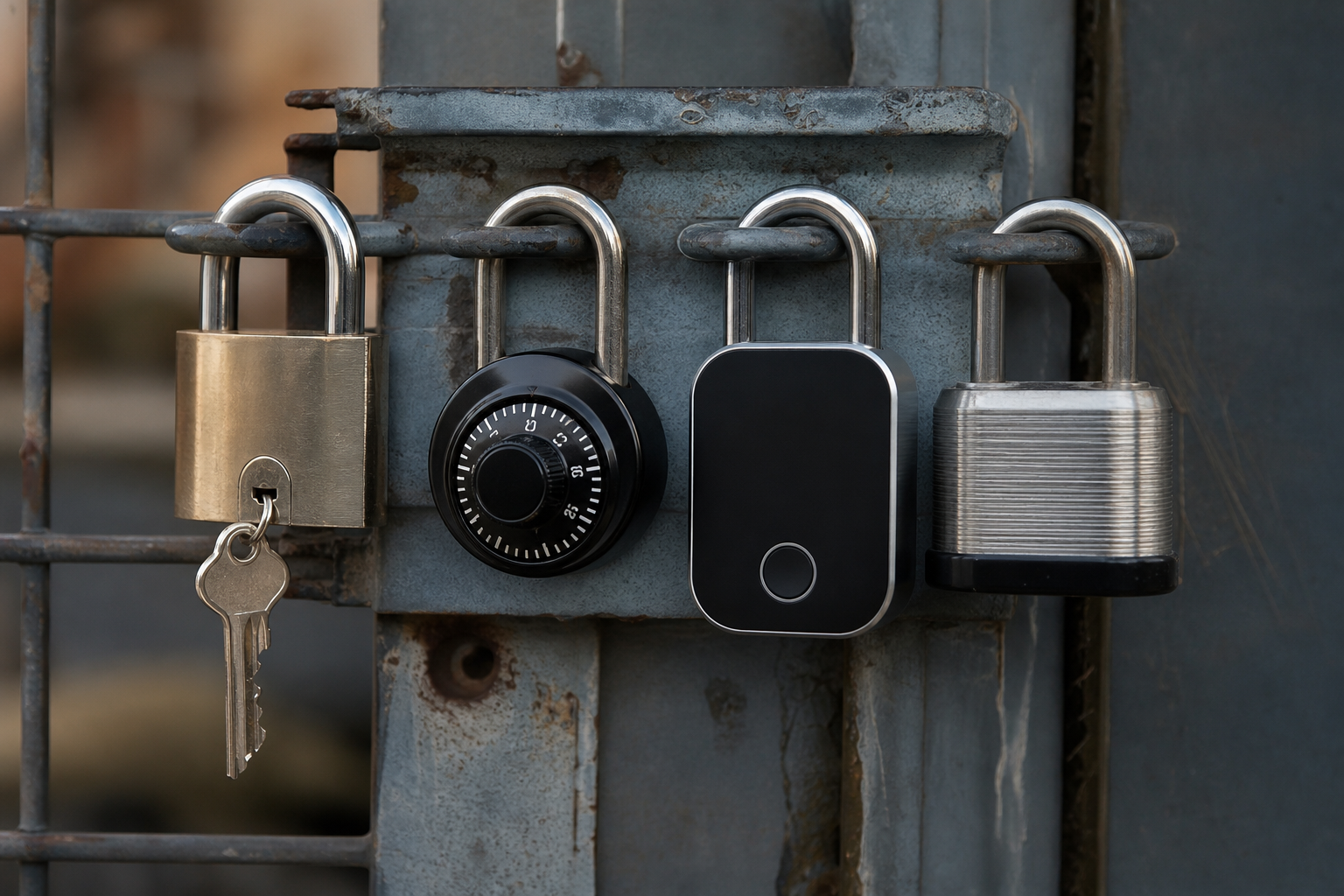
Padlocks come in various types, each suited for different applications. Common types include standard, combination, and smart padlocks.
Standard padlocks use keys, while combination padlocks require a numerical code. Smart padlocks incorporate electronic mechanisms and can be controlled via Bluetooth or other wireless technologies, offering enhanced security features.
Boundary Conditions and Misunderstandings
Padlocks are not suitable for all security needs. They are best used for low to medium security applications and should not be relied upon for high-security requirements.
Common misconceptions include the belief that all padlocks offer the same level of security. In reality, the security level depends on the material, design, and locking mechanism.
Installation and Inspection
Proper installation of a padlock is essential to ensure its effectiveness. It should be attached to a secure anchor point, and the shackle should fully engage with the locking mechanism.
Regular inspection is necessary to maintain padlock integrity. Check for signs of wear, rust, or damage to the shackle and body. Lubricating the locking mechanism can prevent jamming and extend the padlock's lifespan.
Key takeaways
- Padlocks are portable locks used to secure items against unauthorized access.
- They consist of a shackle, body, and locking mechanism.
- Various types include standard, combination, and smart padlocks.
- Padlocks are best for low to medium security applications.
Frequently asked questions
What is a padlock?
A padlock is a portable lock with a shackle that is used to secure items against unauthorized access.
What are the components of a padlock?
A padlock consists of a shackle, body, and a locking mechanism, which can be key-based or a combination system.
What types of padlocks are available?
Types include standard key padlocks, combination padlocks, and smart padlocks, each offering different security features.
Where should padlocks not be used?
Padlocks should not be used for high-security applications as they are best suited for low to medium security needs.