
Quick answer
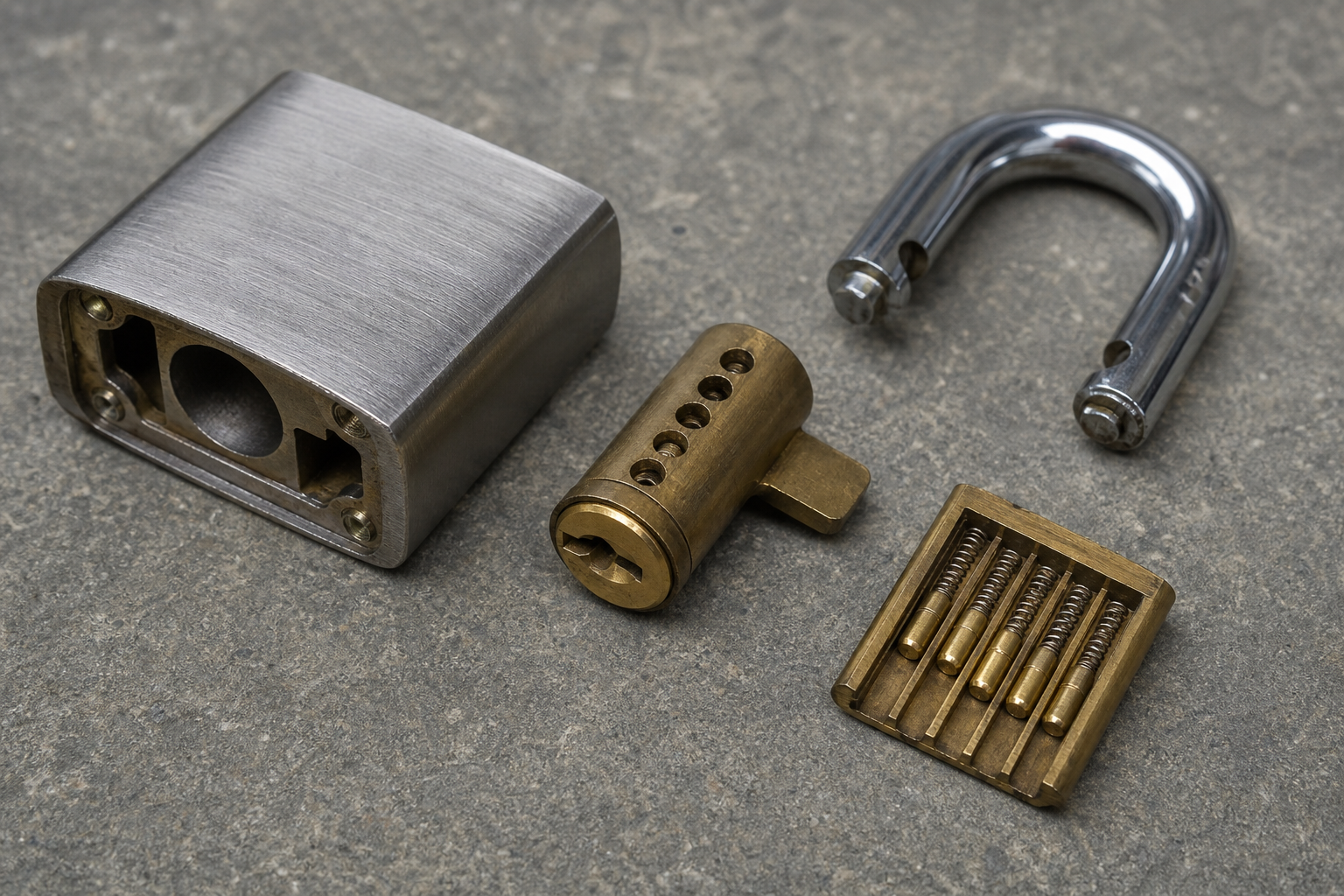
A padlock consists of several key components: the body, shackle, cylinder, and locking mechanism. Each part plays a crucial role in the padlock's security and functionality, ensuring it meets various security needs.
How a Padlock Works
A padlock functions by utilizing a combination of components that work together to secure an object. The shackle, typically U-shaped, is inserted into the padlock body. When locked, the cylinder and locking mechanism prevent the shackle from being removed.
The cylinder contains a series of pins that must align with the key to allow the shackle to open. This alignment is achieved by inserting the correct key, which rotates the cylinder and disengages the locking mechanism, freeing the shackle.
Padlock Specifications
Padlocks come in various specifications to suit different security needs. These specifications include dimensions, materials, and security grades, influencing the padlock's application and effectiveness.
The choice of material, such as brass or steel for the body, and hardened steel for the shackle, affects durability and resistance to cutting. Cylinder grades, like Grade B or C, indicate the level of security against picking and drilling.
| Feature | Typical Range | Description |
|---|---|---|
| Shackle Diameter | 5–12 mm | Thickness of the shackle |
| Body Material | Brass, Steel | Material used for the padlock body |
| Cylinder Grade | Grade B/C | Security rating of the cylinder |
| Shackle Material | Hardened Steel | Material for enhanced cut resistance |
| Body Width | 30–90 mm | Overall width of the padlock body |
Types of Padlocks
Padlocks are available in various types to meet different security requirements and use cases. Common types include combination padlocks, keyed padlocks, and smart padlocks.
Combination padlocks use a rotating dial or push-button system to unlock, while keyed padlocks require a key. Smart padlocks integrate digital technology, allowing remote access and monitoring through mobile devices.
Common Misunderstandings About Padlocks
A common misunderstanding about padlocks is that all models provide the same level of security. In reality, the security level depends on the materials, cylinder grade, and shackle design.
Another misconception is that padlocks are universally applicable. However, specific environments and security needs require different padlock types, such as weather-resistant models for outdoor use or high-security options for sensitive areas.
Padlock Selection Criteria
Selecting the right padlock involves considering the security requirements, environment, and usage. For example, outdoor padlocks should be weather-resistant, often featuring stainless steel or coated materials to prevent rust.
The security level needed will dictate the choice of cylinder grade and shackle material. High-security areas may require padlocks with hardened steel shackles and advanced cylinders to resist tampering.
Installation and Inspection of Padlocks
Proper installation of a padlock is crucial for ensuring its effectiveness. The shackle should fully engage with the locking mechanism, and the padlock should be positioned to minimize exposure to cutting tools.
Regular inspection is recommended to maintain security. This includes checking for signs of wear, ensuring the key or combination functions smoothly, and verifying that the locking mechanism engages correctly.
Key takeaways
- A padlock consists of a body, shackle, cylinder, and locking mechanism.
- The security level of a padlock depends on its materials and design.
- Various types of padlocks are available, including keyed, combination, and smart padlocks.
- Not all padlocks are suitable for every application; selection should match the security needs.
Frequently asked questions
What are the main parts of a padlock?
The main parts of a padlock include the body, shackle, cylinder, and locking mechanism.
How do master padlock parts differ?
Master padlock parts often feature enhanced security components, such as hardened shackles and high-grade cylinders, for improved protection.
Can padlocks be used outdoors?
Yes, but it's important to choose weather-resistant padlocks for outdoor use to ensure durability and functionality.
Related pages