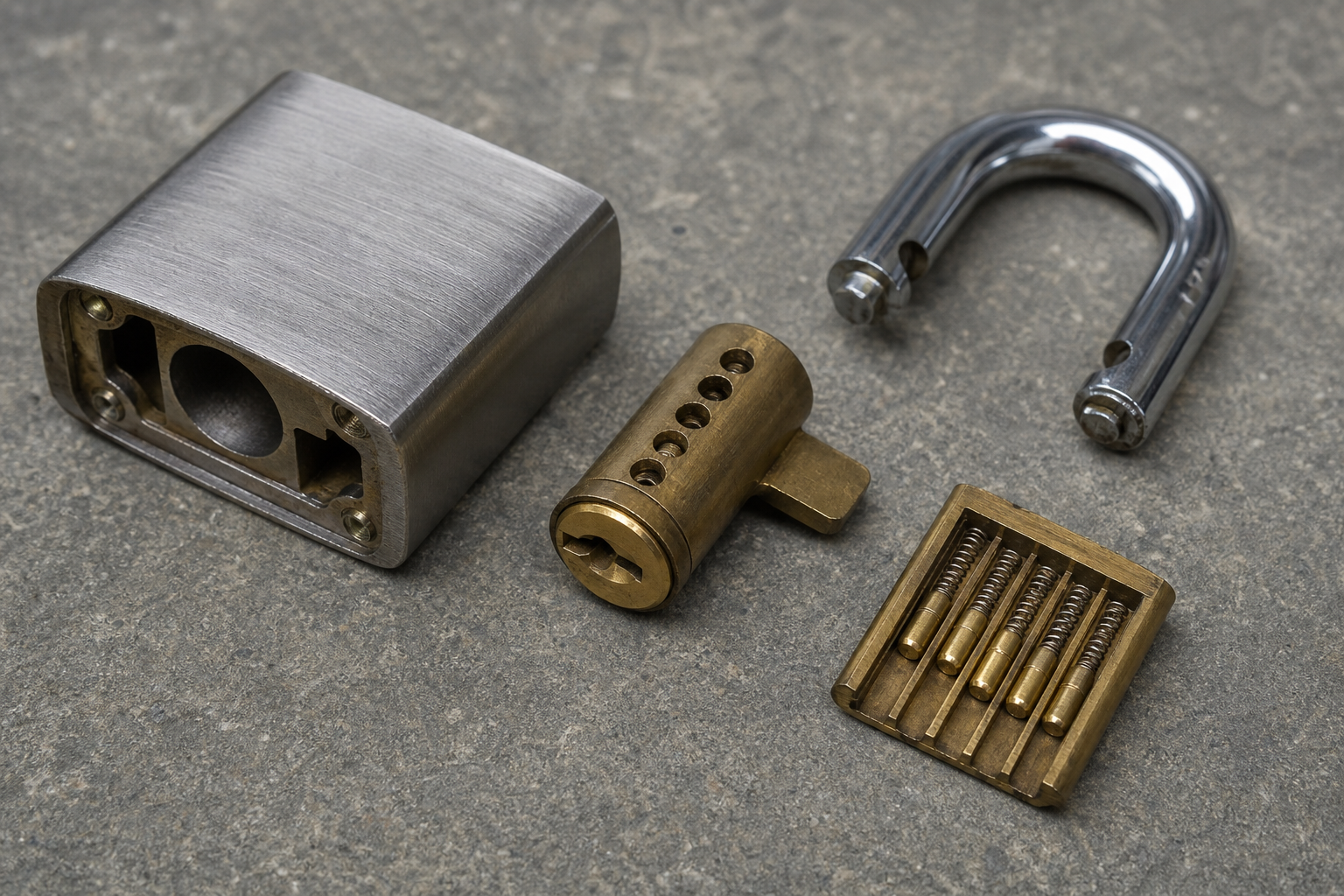
Padlock Freight Choice: LCL, FCL, or Air?

Padlock freight options are a logistics decision that require unique considerations due to the density and weight of the product.
Understanding when to use Less than Container Load (LCL), Full Container Load (FCL), or air freight can significantly impact cost and delivery efficiency in the padlock industry.
Why Freight Math Matters in Padlock Shipping
Padlocks, due to their dense nature, pose unique challenges in transportation logistics compared to standard consumer goods. Procurement professionals must consider not only the weight but volume efficiency. Decisions around shipping become more complex given a 20ft container can hold approximately 28 cubic meters, impacting how many units can fit based on padlock density.
Padlocks packing tightly, often more than 75% of available space per cubic meter, affects quotes typically provided by freight forwarders who may not account for this dense packing capability. This can lead to misquoted shipping costs, which ultimately affects bottom lines for distributors and retailers.
Choosing Between LCL, FCL, and Air Freight
The choice between LCL, FCL, and air freight hinges largely on quantity and urgency. Opting for FCL might seem costly initially, but for high-volume shipments, it often provides cost-per-unit advantages. LCL, while flexible for smaller loads, carries the risk of delays due to consolidation needs. Air freight remains the swiftest but is prohibitively expensive for bulky, heavy shipments like padlocks.
A real example involves a hypothetical Home Depot, where precise monthly forecasts can make FCL the more economical option compared to LCL’s lesser quantity adaptability, given consistent product rollout needs across multiple locations.
Economic Implications of Container Sizing
Two main container sizes — 20ft or 40ft — present distinct economic decisions. Though a 40ft container almost doubles the capacity of a 20ft, it does not double the cost, often making it a preferred choice for sizable shipments. However, for padlocks specifically, the 20ft container frequently suffices given their dense packing nature, preventing underutilization.
This consideration aligns with strategic shipping practices, ensuring that displacement volume matches the padlock’s physical properties, balancing operational costs effectively as larger containers leverage scale efficiencies.
Delivery Terms: DDP vs FOB
Delivery Duty Paid (DDP) and Free on Board (FOB) terms significantly influence procurement strategy. DDP can simplify import processes by handling tariffs, customs, and logistics in one cost, advantageous for operations needing streamlined supply chains. In contrast, FOB grants buyers control over shipping logistics post-shipment, often letting them exploit competitive shipping markets to reduce costs.
Manufacturers like Yuefong Lock in Zhongshan, who manage in-house molds while producing over ten million locks annually, illustrate the scale required for competitive FOB operations. This control empowers large procurement managers at firms like ASSA ABLOY to optimize freight decisions for advanced supply network adaptations.
Frequently Asked Questions
What is a common miscalculation in padlock shipping?
Freight forwarders often misquote due to ignoring padlock density per cubic meter, leading to incorrect cost estimations.
When is air freight viable for padlocks?
Air freight is viable for urgent, low-weight shipments but costly for padlocks’ dense, heavy nature.
How does container size impact cost for padlocks?
Choosing a 40ft over a 20ft doesn’t double costs but enhances unit economics for larger volumes, a mismatch for dense goods like padlocks.
Industry References
Version 1.0 — Published September 10, 2026 · Editorial review window: 90 days