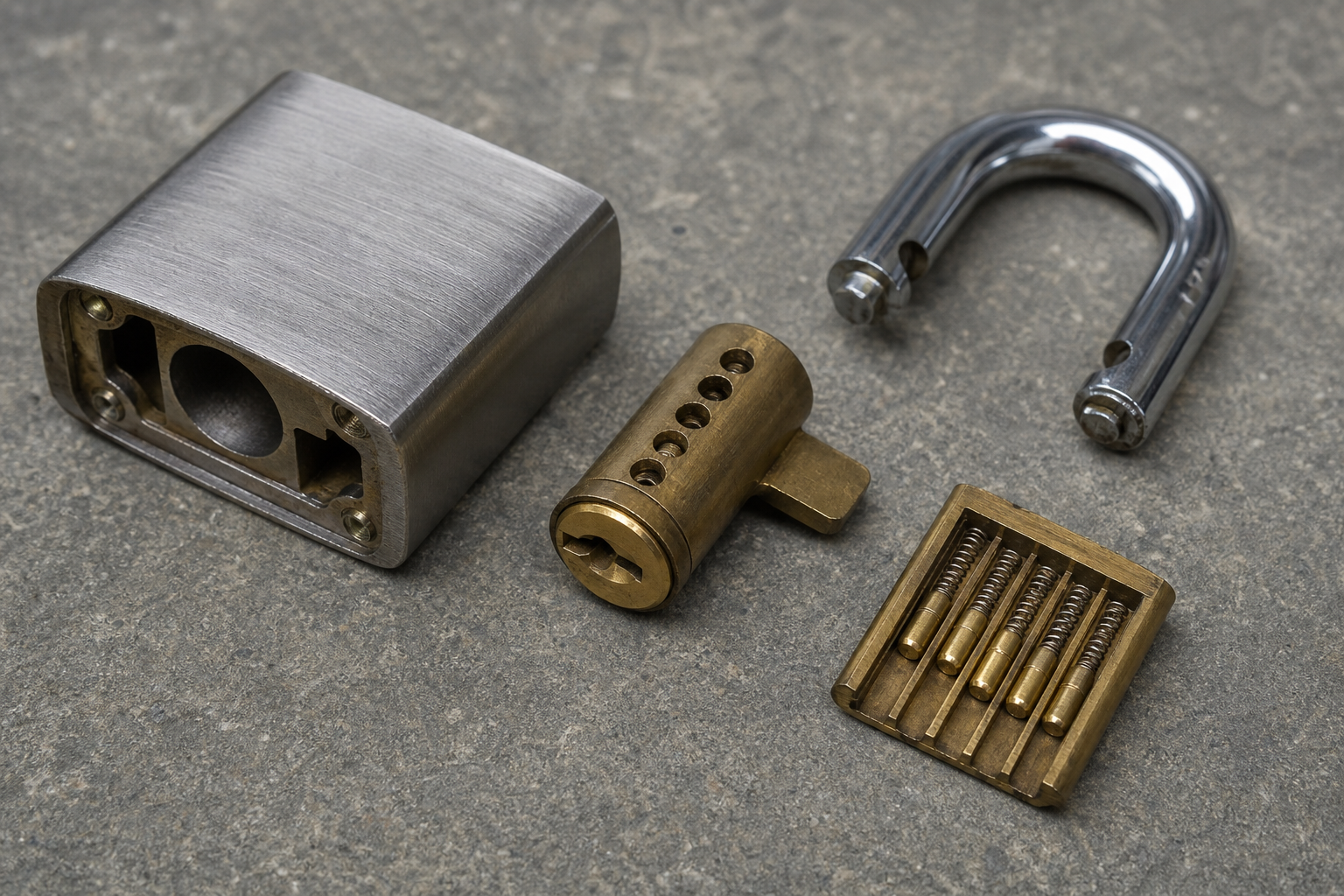
Laminated Padlocks: Industrial LOTO Strength

Laminated padlocks are multi-layer riveted steel padlock constructions that offer cut resistance through structural redundancy rather than solid mass. Procurement managers in industrial sectors, especially those concerned with lockout-tagout (LOTO) applications, find laminated designs appealing due to their proven durability under harsh conditions.
This article will explore why laminated padlocks are favored in industrial settings while solid brass padlocks are preferred in residential use, focusing on structural strength analyses, ASTM F883 padlock grades, and weight-to-shear ratios.
Understanding ASTM F883 Padlock Grades
ASTM F883 establishes grading standards for padlocks based on factors like impact resistance, shackle cut resistance, and usability. This standard helps procurement professionals ensure they select padlocks that meet specific security needs. For instance, a Grade 4 padlock offers higher resistance compared to a Grade 1, making it suitable for demanding environments. Specifically, ASTM F883 tests padlock endurance and security, facilitating a clear comparison for procurement managers when evaluating different designs.
Strength in Laminated Construction
Laminated padlocks are favored in industrial LOTO applications due to their robust construction, which involves multiple layers of steel riveted together. This design inherently increases the lock’s resistance to physical attacks by distributing force across layers. In practical terms, the weight-to-shear ratio of laminated padlocks often surpasses that of solid-body counterparts, an essential factor in surviving industrial environments. This structural redundancy ensures longevity and reliability, crucial for locking systems exposed to constant stress and potential tampering.
Solid Brass for Residential Security
While laminated padlocks excel in industrial contexts, solid brass padlocks often dominate residential markets. Brass is corrosion-resistant and visually appealing, making it ideal for outdoor and decorative use. The solid mass of a brass lock also provides sufficient security for typical residential needs, where the threat environment differs significantly from industrial settings. Consumers value the aesthetic and practical benefits of brass, which include a longer lifespan in less aggressive environments.
Explore our comprehensive padlock and smart security solutions for OEM/ODM requirements.
Comparing Riveted vs. Cast Construction
Riveted laminated padlocks and cast solid brass padlocks offer distinct advantages depending on their use cases. Riveted construction allows for complex, layered designs that enhance durability through redundancies like multiple shackle engagement points. In contrast, cast constructions are more straightforward but provide excellent resistance to outdoor elements due to fewer joints and potential weak points. Procurement specialists must weigh these factors, considering the operational environment and security requirements, to make informed decisions.
| Feature | Laminated Padlocks | Solid Brass Padlocks |
|---|---|---|
| ASTM Grade | 1-4 | 1-3 |
| Optimal Use | Industrial LOTO | Residential |
| Material | Riveted Steel Layers | Solid Brass |
| Corrosion Resistance | Moderate | High |
Frequently Asked Questions
What is the ASTM F883 standard?
ASTM F883 tests padlock durability, ensuring they meet security needs through various grades.
Why choose laminated padlocks for industrial use?
Their layered construction provides superior cut and force resistance in harsh environments.
Are solid brass padlocks suitable for outdoor use?
Yes, they resist corrosion, making them ideal for residential outdoor applications.
Industry References
Version 1.0 — Published August 7, 2026 · Editorial review window: 90 days