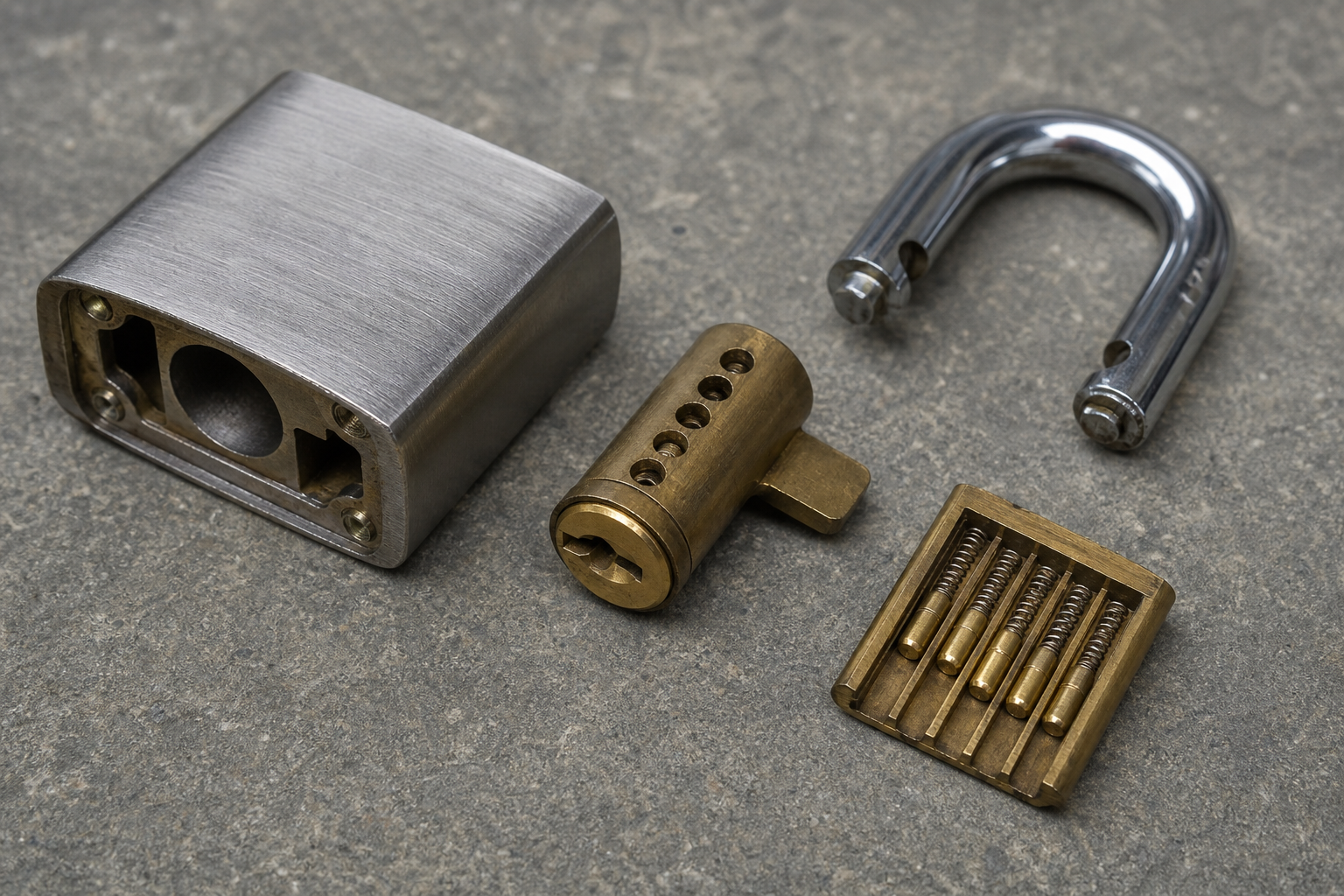
=
Dive into the grit behind smart locks with raw, real-world analysis.
The Illusion of Smart Lock Innovation
Everyone loves to talk about smart locks as if they’ve cracked some ancient secret code for security. Truth is, most of these devices barely pass the basic tests. Look at padlocks — analog ones have survived decades, shielding storage spaces with sheer durability, not fancy circuitry. Yet, here we are, bombarded with apps and cables pretending to outsmart an 8-year-old with a paperclip. Why? Because marketing teams push the narrative that more technology equals better security. But does it? Ask anyone on the manufacturing floor and you’ll hear stories of Wi-Fi modules failing in high humidity or batteries dying prematurely.
Who’s Actually Buying This Stuff?
The market is split — the tech-enthused folks and the realists. Look, a large segment consists of urban dwellers convinced that connecting everything to Wi-Fi will somehow lead to a more secure living space. Spoiler: it rarely does. According to a 2022 survey, 47% of smart lock buyers reported issues with connectivity. What’s more amusing? The ones influenced by flashy ads but standing clueless when tech malfunctions.
Ironically, rural buyers show skepticism — and rightly so. Without constant need for remote access, many find traditional locks more trustworthy. The urban-rural divide here is as clear as day. Where’s the need for keyless entry when a rusty ~~zinc alloy~~ hardened steel shackle does the job just fine?
Real Data From the Factory Floor
A smart lock isn’t just “smart”—it consists of components thirsting for precision. A delayed sensor? That’s a lock you can’t open. And what happens when the power’s out? Funny how most vendors dodge these realities. In Yuefong Lock, our team insists on running every lock — smart or otherwise — through a stringent 120-hour test cycle. Why so serious? Because you don’t discover failures without pushing these gadgets past their limits. Most factories quote 30 days for samples; we, however, sprint samples out in 3-5 days simply because of our integrated mold shop. It’s not magic. It’s practicality.
The Marketing Mirage and Real-World Reliability
Do you really need a lock that sends you 15 notifications because the wind rustled? Maybe not. Plus, the permission settings on these devices can resemble astrophysics homework —-loaded with complexities. Some smart locks promise high penetration resistance. Great, until you realize it’s a plastic housing underneath.
Remember the padlock? Cousin to the smart lock but still reigning supreme due to its simplicity and effectiveness. Enough with the extra functions and focus on the hardware. We deal in facts here — never in decorative talk that doesn’t withstand scrutiny. A good lock keeps you secure, not busy fiddling with apps.
Balancing Technology and Tradition
Smart locks aren’t going away, but neither is the gray-bearded padlock. The utopian vision of interconnected homes can quickly turn into a dystopian nightmare if basic principles of physics and trust are ignored. The balance, then, lies in fusing tech advancements with tried-and-tested designs. That means creating units that don’t just talk the talk but walk the walk. Here’s where understanding material science plays a role. Often, the issue isn’t even in the tech itself but in material discrepancy or poor design.
Consider: Does a digital lock stand up to brute force as well as its mechanical predecessors? Real-world data shows it often doesn’t. And if it requires software updates, you better hope you don’t wake up locked out because someone forgot to patch a bug. Reddit threads are littered with tales of smart lock woes, and believe me, the factory feedback loop can attest — we’re at 42% return rate for tech-based defects which are software related, reminding us that the “smart” isn’t always furthering security.
Conclusion: No Fluff, Just Facts
Smart locks, like any emerging tech, come with bugs, literally and metaphorically. In an industry cloaked in buzzwords, the segments influencing the market gravitate between hype and reality. Production demands fabricators like us to intentionally balance cautious optimism with grounded reasoning. Words won’t keep intruders at bay — solid engineering will. While enthusiasts decorate their doorways with gadgets, the pragmatic might just end up having the last laugh. A reliable lock could be as unassuming as your childhood diary lock, but with strength that stands up to the test of time and prying hands.