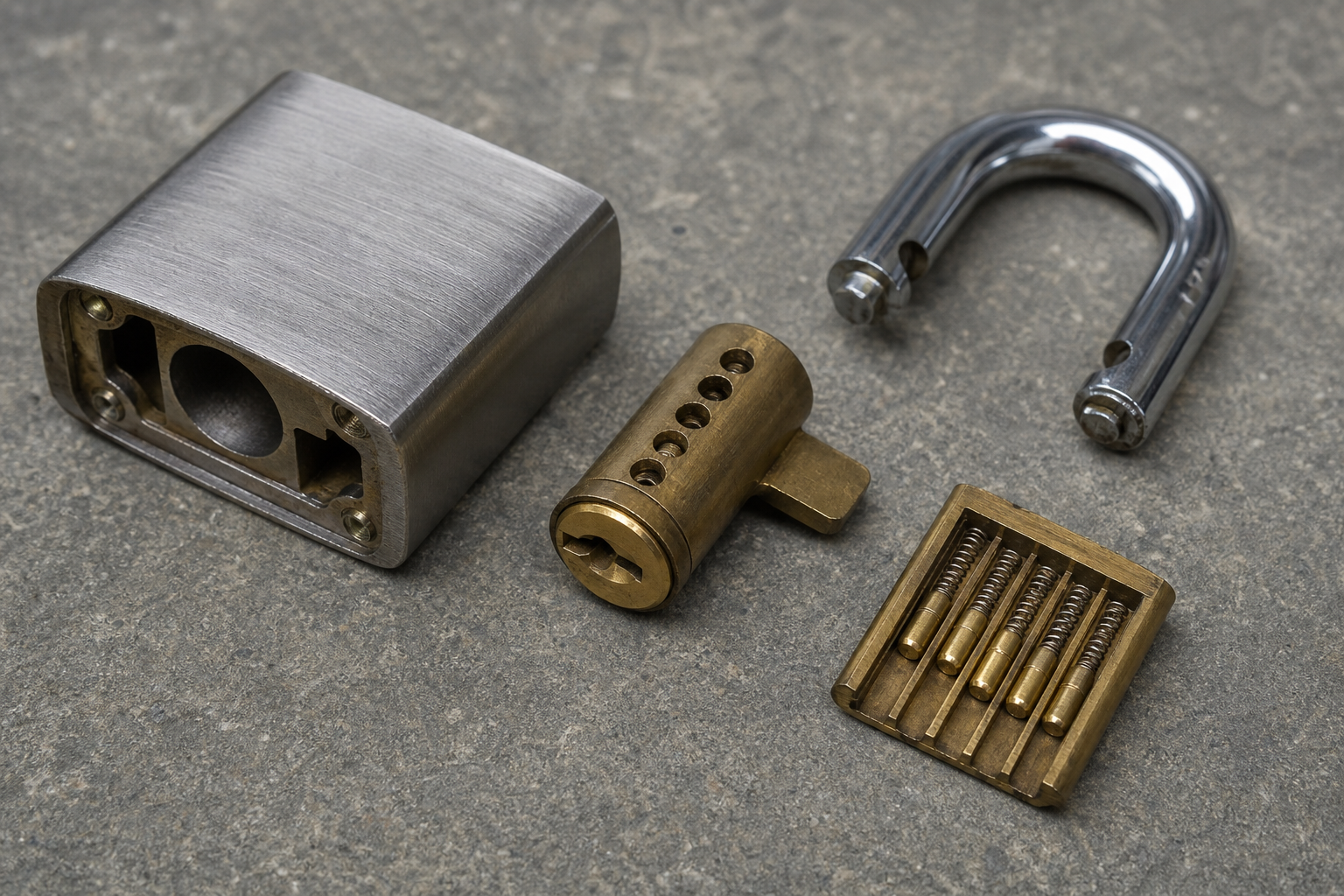
ANSI/BHMA Padlock Grades Explained: Grade 1 vs 3

ANSI/BHMA padlock grades are standardized categories that measure the durability and security levels of padlocks. Procurement managers often face confusion between Grade 1, Grade 2, and Grade 3 padlocds, especially when specifications aren’t comprehensive.
This article examines each grade’s specific tests, such as cycle test counts and operational versus security ratings, to provide clarity for making informed procurement decisions.
Understanding ANSI/BHMA A156.11 Padlock Grades
ANSI/BHMA A156.11 is a standard that categorizes padlocks into three grades based on their endurance and security features. Grade 1 is the highest, designed for heavy-duty commercial applications. The key difference lies in the cycle test counts, with Grade 1 requiring up to 250,000 cycles, reflecting its durability.
Procurement managers should note that operational grade focuses on the padlock’s ease of use and functionality under constant operation, distinct from its security rating. This divergence often leads to misinterpretations in specification sheets that highlight security without emphasizing usability.
Cycle Test Counts and Their Implications
Cycle tests, mandated by ANSI/BHMA, assess the lock’s operational durability by simulating repeated use. Grade 1 padlocks undergo rigorous cycles, typically 250,000, to verify their sustained performance under stress. In contrast, Grade 2 and Grade 3 require fewer cycles, correlating to lighter uses.
This cycle difference is crucial when specifying requirements for high-traffic areas such as public facilities or warehouses. Understanding these counts helps ensure that procurement aligns with environmental demands, reducing maintenance overheads.
Operational vs. Security Grades
Operational and security grades within the ANSI/BHMA standards can cause confusion. Operational grade evaluates functionality and endurance under practical conditions. Meanwhile, security grade focuses on resistance against forceful entry attacks.
For instance, Grade 1’s superior operational and security ratings make it suitable for commercial applications where both reliability and defense are paramount. In contrast, Grades 2 and 3 cater to moderate and low-security environments, respectively.
Explore our comprehensive padlock and smart security solutions for OEM/ODM requirements.
Commercial Application of Grade 1 Padlocks
Grade 1 padlocks are prevalent in commercial settings due to their robust security and durability. The high cycle test count and superior security rating make them suitable for facilities with strict security needs.
An example is Yuefong Lock’s facility in Jiangmen, which incorporates Grade 1 standards in their high-security models, demonstrating their application in rigorous environments. Facilities like theirs, with advanced prototyping capabilities, ensure that their products meet high durability standards.
| Feature | Grade 1 | Grade 2 | Grade 3 |
|---|---|---|---|
| Cycle Tests | 250,000 | 150,000 | 75,000 |
| Commercial Use | Yes | Limited | No |
| Typical Security | High | Moderate | Low |
Frequently Asked Questions
What are the cycle test counts for each padlock grade?
Grade 1 requires 250,000 cycles, Grade 2 requires 150,000, and Grade 3 requires 75,000.
What do operational grades assess?
They assess the padlock’s ease of use and functionality under constant operation, separate from security ratings.
Why might specs mislead about padlock grades?
Specs may emphasize security ratings but often downplay operational usability, leading to procurement misalignment.
Industry References
Version 1.0 — Published June 5, 2026 · Editorial review window: 90 days