Disc Detainer Padlocks: Pick Resistance vs Pin Tumbler
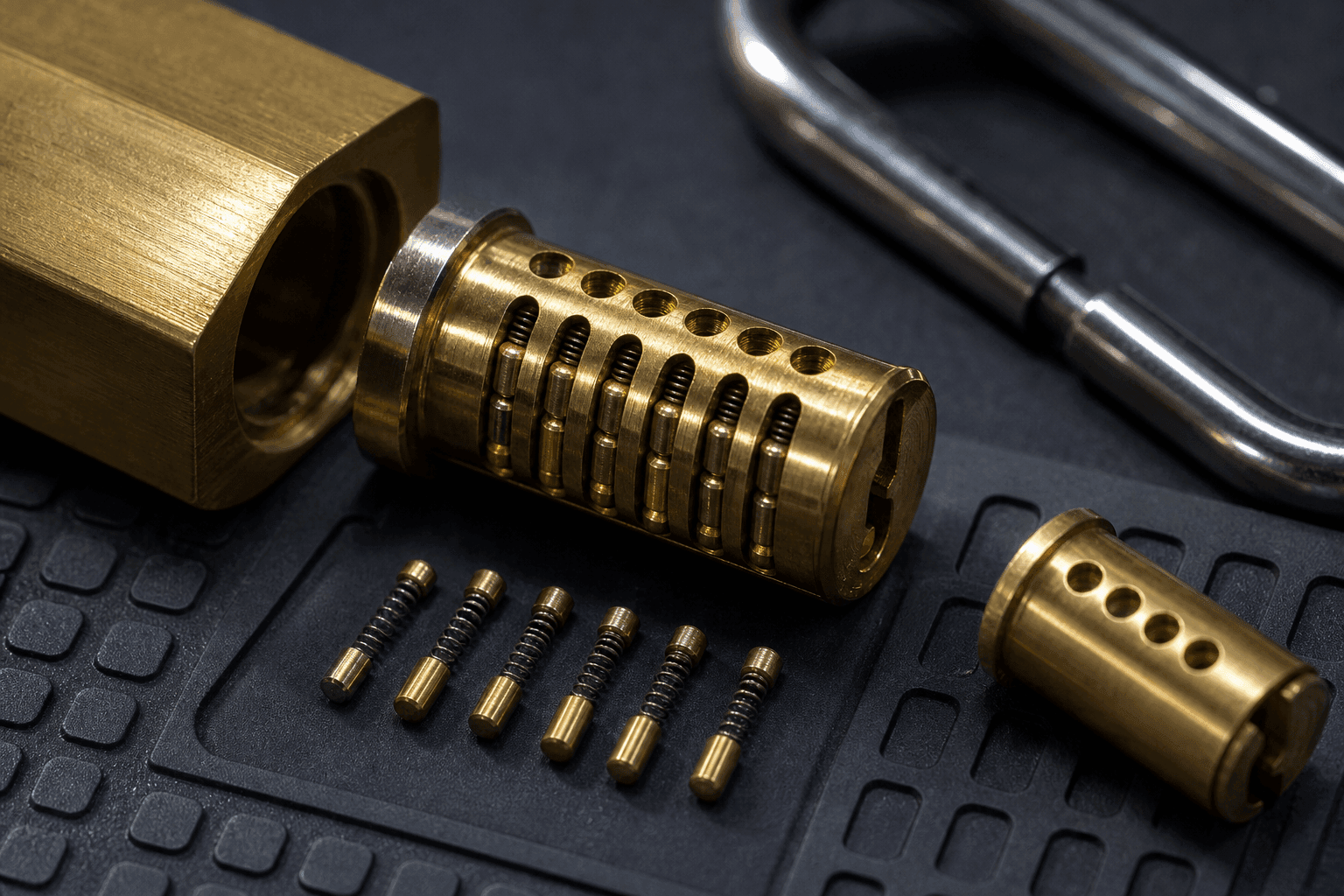
Disc detainer padlocks are a cylinder design that uses rotating discs aligned by a key, rather than spring-loaded pins, to control the locking mechanism. While they offer superior pick resistance, many procurement managers still lean towards pin tumbler locks due to their widespread availability and cost effectiveness.
This article delves into the design differences, pick resistance capabilities, and procurement considerations that set these lock types apart.
Design Fundamentals: Pin Tumbler vs Disc Detainer
Pin tumbler locks utilize a set of pins obstructed by springs which must be aligned to match a key profile for unlocking. In contrast, disc detainer locks employ a series of rotating discs that a key must correctly align to open the lock. The primary strength of disc detainer locks lies in their ability to resist common picking tools and methods, which explains their high resistance in lockpicking circles.
Understanding Pick Resistance
The pick resistance of a lock is often determined by tests like the ANSI/BHMA grade pick test. Disc detainer locks usually outperform pin tumblers on these tests due to their complex structure, which renders traditional picking techniques ineffective. According to TOOOL’s bypass database, lockpickers frequently abandon attempts on disc detainer models much sooner.
Why Pin Tumblers Remain Popular
Despite the superior pick resistance of disc detainers, pin tumblers remain popular in commercial settings. This is primarily because pin tumblers are less expensive and more widely available than disc detainers. The ANSI/BHMA standards ensure that even pin tumbler locks meet certain security thresholds, providing adequate protection for most environments. Moreover, the ease of finding replacement parts or rekeying pin tumblers makes them appealing for large installations.
Procurement Considerations
For procurement managers, the choice between pin tumblers and disc detainers often comes down to application-specific needs. While disc detainers offer higher security, their limited availability and higher cost can be a hurdle. Manufacturers like Yuefong Lock in Jiangmen optimize production by having in-house mold workshops, allowing for rapid prototyping and production turnaround which benefits both lock types.
| Feature | Pin Tumbler | Disc Detainer |
|---|---|---|
| Pick Resistance | Moderate | High |
| Cost | Low to Moderate | High |
| Availability | Widespread | Limited |
| Rekeying Ease | High | Moderate |
Frequently Asked Questions
What makes disc detainer locks hard to pick?
The rotating discs require precise alignment, unlike spring-loaded pins in pin tumblers.
Why are pin tumbler locks preferred by large buyers?
They offer good security at a lower cost and greater availability than disc detainers.
Which lock type is better for high-security needs?
Disc detainer locks provide higher pick resistance, ideal for high-security applications.
Industry References
Version 1.0 — Published July 24, 2026 · Editorial review window: 90 days