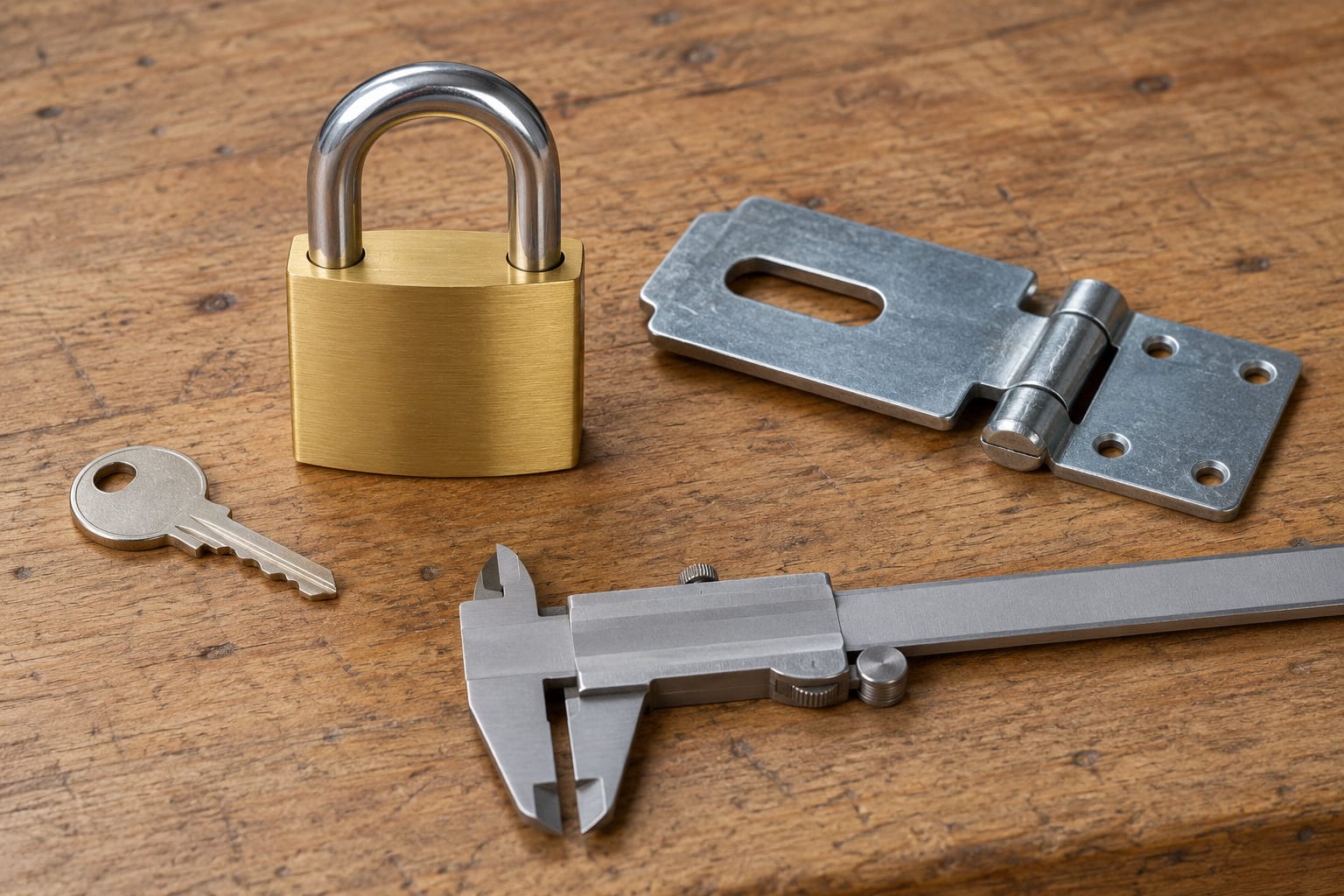
Mechanical padlocks are a familiar choice for securing storage gates, tool cabinets, equipment cages, and other controlled-access areas. For industrial buyers, a useful purchasing brief connects the lock to the actual opening, the working environment, and the people who need access.
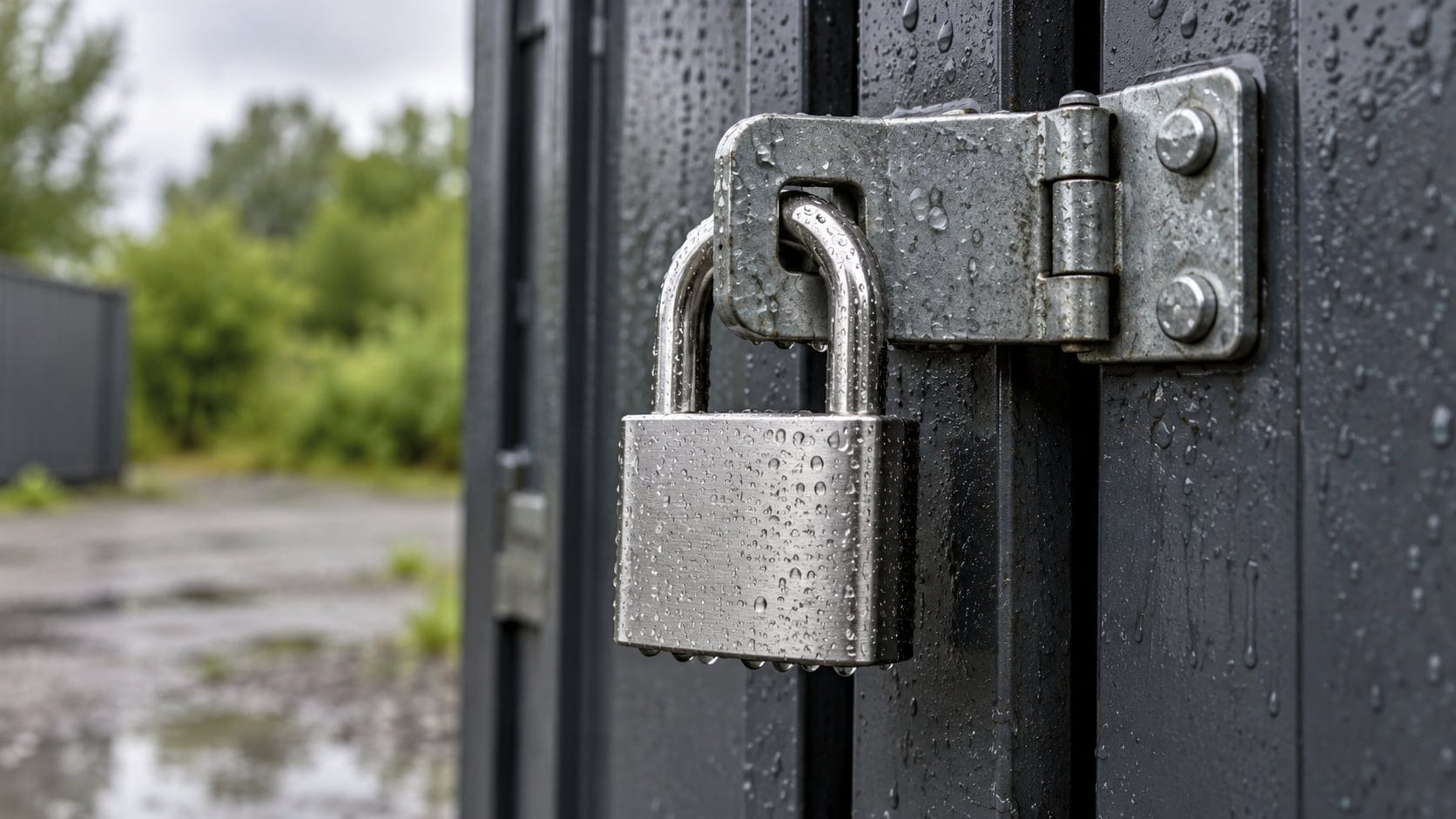
This guide explains a practical way to compare mechanical padlocks before ordering samples or a larger batch. It focuses on fit, environmental suitability, key management, and clear supplier documentation.
1. Define the Application Before Comparing Mechanical Padlocks
Begin with a short description of the installation. Record what will be secured, where the lock will be used, how often it will be opened, and who will hold the keys. Include clear photographs of the existing hasp, gate, cabinet, or other mounting arrangement.
A storage cabinet inside a workshop and a gate exposed to rain create different purchasing requirements. Describe those conditions in the enquiry so that the supplier can recommend a suitable model and explain the evidence supporting the recommendation.
2. Check Shackle Dimensions and Installation Clearance
The shackle is the U-shaped metal part that passes through the hasp or locking point. Check its diameter, internal width, and usable internal height against the actual opening. Confirm that there is enough room to insert the shackle, operate the key, and remove the padlock during ordinary use.
Record measurements in millimetres and ask for a drawing of the proposed model. A sample should be checked on the real installation before the specification is approved. Body dimensions also matter when the lock sits inside a cover or close to another surface.
• Measure the opening that the shackle must pass through.
• Check the distance between the locking points.
• Allow space for the lock body and normal key movement.
• Compare the supplier drawing with a physical sample.
3. Review Materials and Environmental Suitability
Mechanical padlocks are available with different body materials, shackle materials, and surface finishes. Ask the supplier to identify each component clearly. The body finish alone does not describe the entire assembly.
For an outdoor installation, specify exposure to rain, moisture, dust, and any coastal conditions. Request the manufacturer’s recommended application and maintenance guidance for the exact model. If a weather-resistance rating or test result is required, ask for documentation identifying the model, test method, conditions, and result.
Use this information to compare proposals consistently. The illustrations in this article show general applications; they do not demonstrate the tested performance of a particular product.
4. Choose a Keying Arrangement That Matches Daily Operations
Key management should be agreed before ordering. In a keyed-alike arrangement, one key operates multiple compatible locks configured for that key. Keyed-different arrangements give locks separate keys. A master-key system provides planned access through individual keys and an authorized master key.
Discuss these options with the supplier and confirm which arrangements the proposed model supports. Keep a written record of the required number of keys, who is permitted to order replacements, and how spare keys will be stored and issued.
For reference, ABLOY explains common keying arrangements. The terminology is useful when preparing a purchasing brief; compatibility must still be confirmed for the selected products.
5. Inspect the Complete Locking Arrangement
Review the padlock, hasp, and mounting hardware together. Check that the parts align properly and that the padlock can be opened and closed without forcing it. Ask the installer or responsible maintenance team to review the proposed arrangement before a wider rollout.
Keep a sample evaluation record. It can include photographs, measured dimensions, operating observations, and questions for the supplier. Use the same checks for each proposed model so that purchasing decisions can be traced back to documented requirements.
6. Prepare a Clear Enquiry and Sample Checklist
A clear enquiry helps an industrial buyer compare quotations. Include the application, quantity, dimensions, environment, and keying arrangement. Ask the supplier to confirm product specifications, sample availability, packaging, replacement-key arrangements, and the information needed to plan delivery.
Purchasing itemInformation to confirm
Installation fitBody dimensions, shackle diameter, internal width and height
Working environmentIndoor or outdoor use, exposure conditions, model-specific guidance
Key managementKeyed alike, keyed different, or master-key requirements
Sample reviewPhysical fit, normal operation, documentation, and packaging
Frequently Asked Questions
What should I measure before ordering a mechanical padlock?
Measure the opening and spacing of the locking points. Compare these with the proposed shackle diameter, internal width, internal height, and body dimensions. Check a sample on the actual installation.
Can one key operate several padlocks?
Yes, where the locks support a compatible keyed-alike arrangement and are configured accordingly. Ask the supplier to confirm the supported key system and replacement-key process before ordering.
How should an outdoor padlock be selected?
Describe the exposure conditions and request model-specific guidance. Evaluate the materials, finish, maintenance instructions, and any test documentation required for the application.
Discuss Your Mechanical Padlock Requirements
A practical specification brings together fit, environment, access needs, and sample approval. To discuss an enquiry with Yuefong, contact the team with installation photographs, dimensions, intended use, and the required keying arrangement.