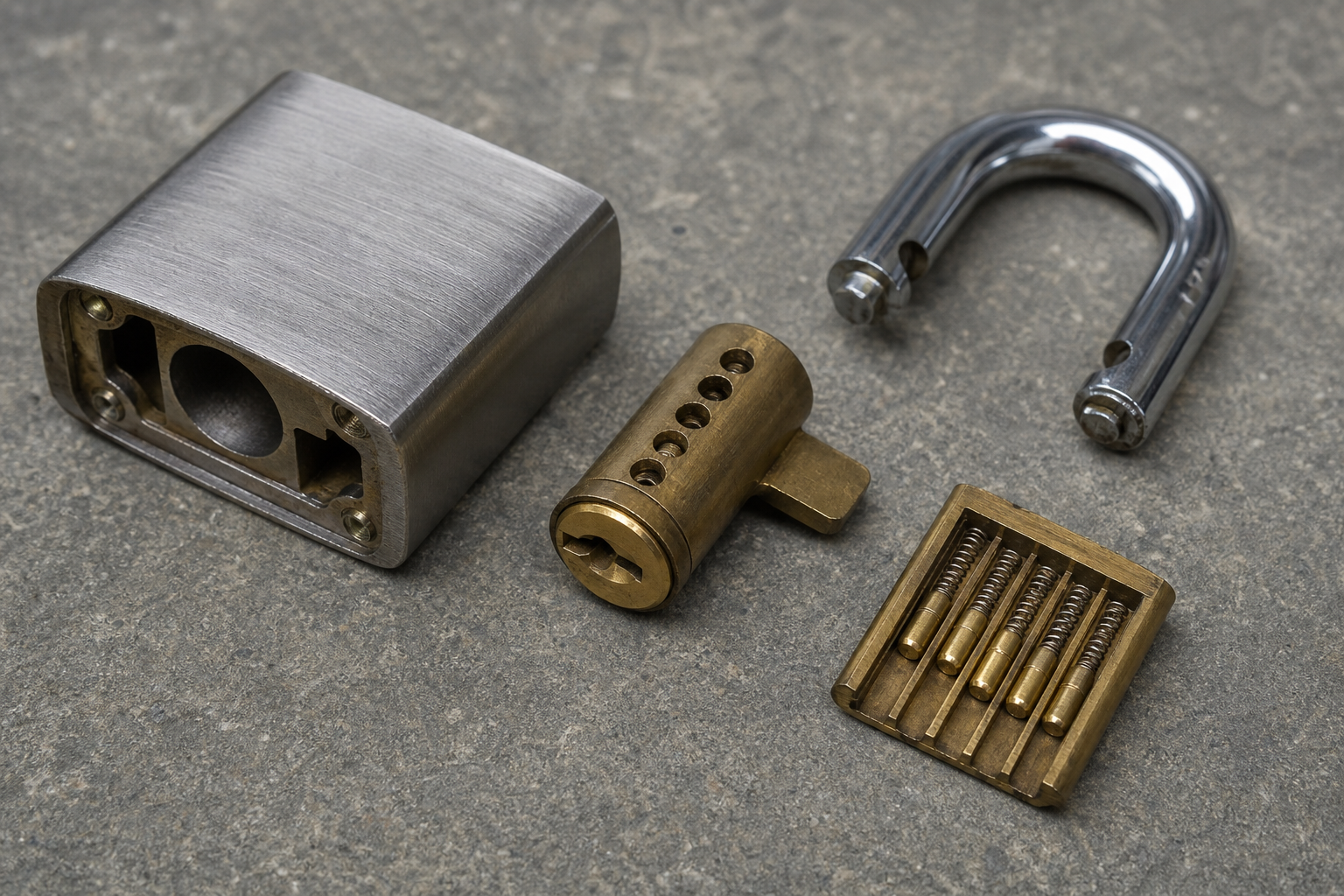
Laminated Padlocks vs Solid Body: Structural Analysis
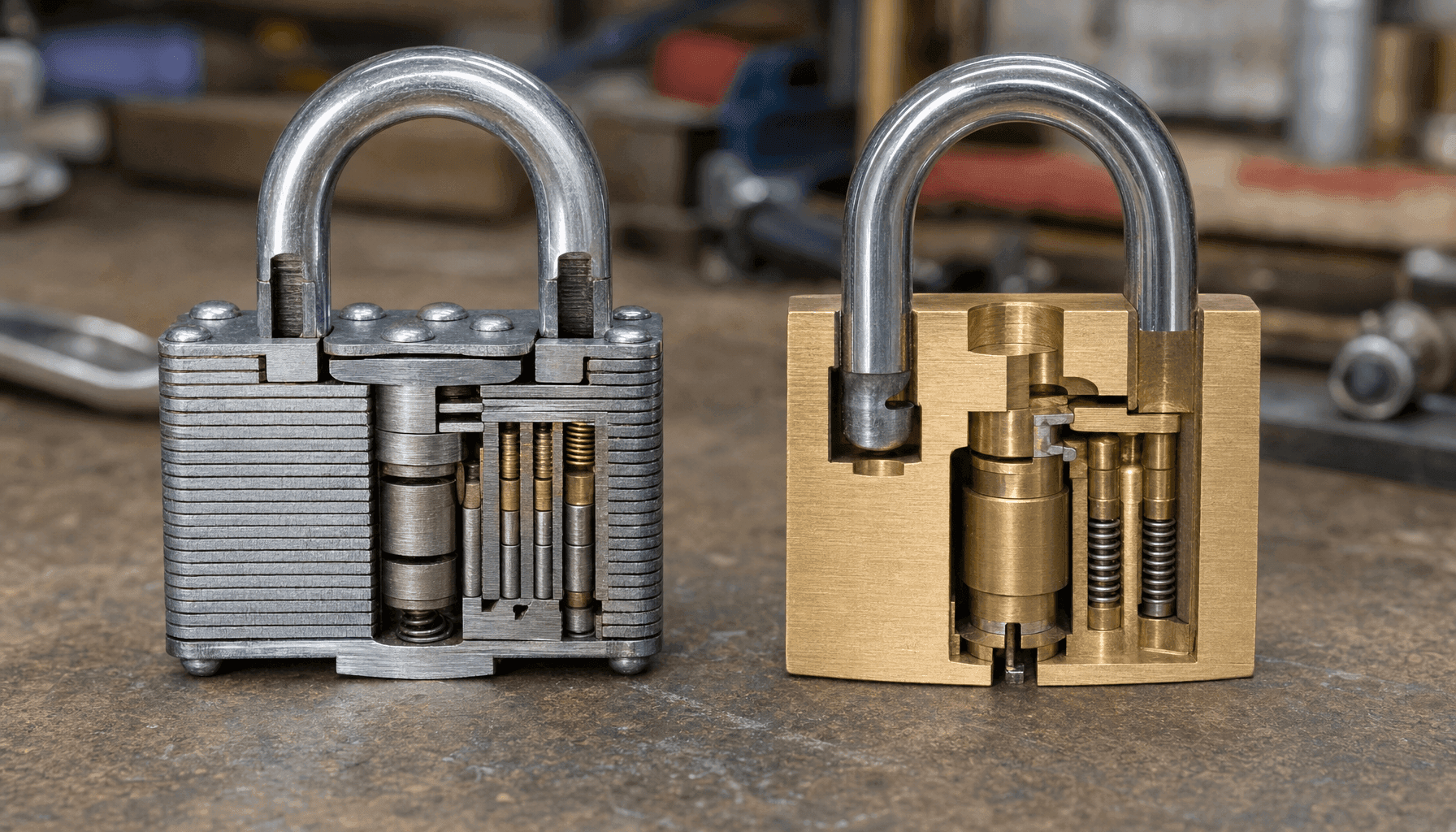
Laminated padlocks are multi-layer riveted steel padlock constructions that offer cut resistance through structural redundancy rather than solid mass. However, procurement managers often grapple with choosing between laminated and solid body padlocks depending on the application environment.
This article analyzes why laminated padlocks dominate industrial lockout/tagout (LOTO) scenarios, while solid brass padlocks are preferred in residential settings, examining factors of structural strength and material performance.
Why Laminated Padlocks Lead in Industrial LOTO
The choice of laminated padlocks in industrial settings, especially for lockout/tagout (LOTO), is largely influenced by their structural resilience. According to ASTM F883 standards, laminated padlocks are often grade 4 or 5, indicating high performance against forced entry.
These padlocks consist of multiple layers of steel, riveted together, offering exceptional cut resistance. The manufacturing process provides these padlocks with a unique weight-to-shear ratio, making them an ideal choice where security is paramount.
Supporting data from Grand View Research shows a steady demand growth in industrial applications for laminated locks, emphasizing their reliability in harsh industrial environments.
Advantage of Solid Brass in Residential Settings
Solicited heavily for home use, solid brass padlocks offer a distinct advantage in residential applications. ASTM F883 also classifies these padlocks, but they prioritize aesthetics and corrosion resistance over raw strength, often rated at grades 2 or 3.
A solid brass lock’s construction, often cast rather than riveted, ensures a more polished finish. Homeowners prefer these for their minimal maintenance requirement and superior resistance to environmental elements.
Data from USITC suggests solid brass padlocks exhibit significant popularity in coastal and humid areas, where corrosion is a considerable concern.
The Role of Riveted vs. Cast Construction
The difference between riveted laminated designs and cast solid bodies heavily influences their respective applications. In a laminated padlock, multiple layers are riveted together to absorb impacts and shear forces across its structure.
In contrast, solid brass padlocks rely on a uniform structure, offering strength over extended use. Factories with in-house mold workshops, such as Yuefong Lock in Jiangmen, reduce production times significantly, allowing for rapid prototyping of these solid structures.
This manufacturing flexibility is crucial in meeting shifting market demands, as noted in McKinsey’s recent report on manufacturing agility.
Weight-to-Shear Ratio: A Deciding Factor
The weight-to-shear ratio directly impacts padlock performance in specific environments. Laminated padlocks, with their layered assembly, distribute load and stress effectively. This make them ideal for heavy-duty applications requiring increased security.
Solid body padlocks, like those made from brass, tend to be heavier but have lower shear resistance. This influences the procurement decisions organizations make, particularly in choosing locks that best align with specific operational needs.
Analysis by Bloomberg suggests that understanding weight distribution can enhance decision-making in security applications, aiding procurement professionals in selecting the right product for the right environment.
Frequently Asked Questions
What standards do laminated padlocks meet?
ASTM F883 standards grade them higher for industrial use, typically at grades 4 or 5 for forced entry resistance.
Why are solid brass padlocks preferred in coastal regions?
They resist corrosion better, making them ideal for humid climates. USITC data highlights their regional popularity.
What role does weight-to-shear ratio play in padlock selection?
It determines padlock’s effectiveness under stress; laminated types distribute stress better in industrial use.
Industry References
Version 1.0 — Published May 22, 2026 · Editorial review window: 90 days